
Smoke

A writer once said to “write from your scars, not your wounds”. Implying that no one wants to hear you bleeding profusely on the page. They want to hear the writer tell the story of their wounds in totality; what happened to them and how they healed. How did this scar form and what meaning do they ascribe to it now?
But what about the overlapping scars? What about the wounds and damage that lives below our perceptions, what about the wounds that are diffuse, or the mysterious ones that live in some sort of orbit in our psyche’s— appearing in seeming randomness throughout our lives. How can we be certain of which wounds are healed, which are torn forever, and where one gash ends and another begins.
I’ve lived a life in cahoots with trauma and death. But understanding which wounds I have and from where and when they came eludes me. And when we finally look for the source of the bleed we often seek out others. Psychologists, therapists, family, friends, colleagues, anyone who’ll listen, anyone who has an opinion. And thus far I’ve pieced together this: doctors are good at naming things, soldiers are good at rationalizing things, family and friends are good at condemning things, but the universe is good at explaining things— if you can listen.
The interior of a Light Armoured Vehicle III, or LAV3 as it’s colloquially called in the Canadian Army, is ingrained in my memory. I must have spent over five hundred hours inside of it over the course of two years which included seven months in Afghanistan in 2008. Initially, while in Canada, I was trained as a gunner, the operator who sits inside the gigantic weapon turret in the middle of the war machine. One little chair for the gunner, one for the crew commander. Seven men sit ready in the trunk, and a driver up front. But by the time we deployed to Afghanistan in the spring of 2008, I had changed roles and was now one of the troops in the storage compartment of the vehicle, jumping out of the big truck and into action on foot depending on the task; sweeping the road for mines or IED’s (improvised explosive device), searching buildings and compounds, fighting the enemy on foot, or any other action required.
This was a relief for me. I had often wondered, or day-dreamed (if you can call it that), about what it must be like to be in the LAV— especially the cramped and mechanical gunner’s turret— if the vehicle were to get hit by an IED.
The turret of the LAV 3 has to be the most unforgiving, cramped, and painful little place to be. You try to resist any unwanted movements or jerks from the large armoured vehicle as it bounces of the rocky terrain. Every little dial, button, handle, or control switch, is cased in some sort of sharp-edged machined aluminum, and when the vehicle rocked or shifted your body slammed into these hard metal pieces. The whole module housing the gunner and the crew commander was also incased in a kind of metal fence, to protect anyone else in the vehicle from getting a hand or limb crushed while the gunner was traversing the turret around looking for threats. Oh, and stored in a large metal bin between the crew commander and the gunner was a stack of primary ammunition: hundreds of 25mm high explosive/incendiary rounds each about the size of a child’s forearm.
To imagine being in this turret surrounded by sharp metal and bulky army idiot-proof switches, perched next to stacks of high explosives, while the vehicle got hit by a roadside IED, was a little personal nightmare for me. Fortunately for me it wasn’t to be. Unfortunately, for many, it was. And it was the fate of one of my best friends, Stephen Stock, on August 20th 2008, he was from Medicine Hat, he was 25 years old.
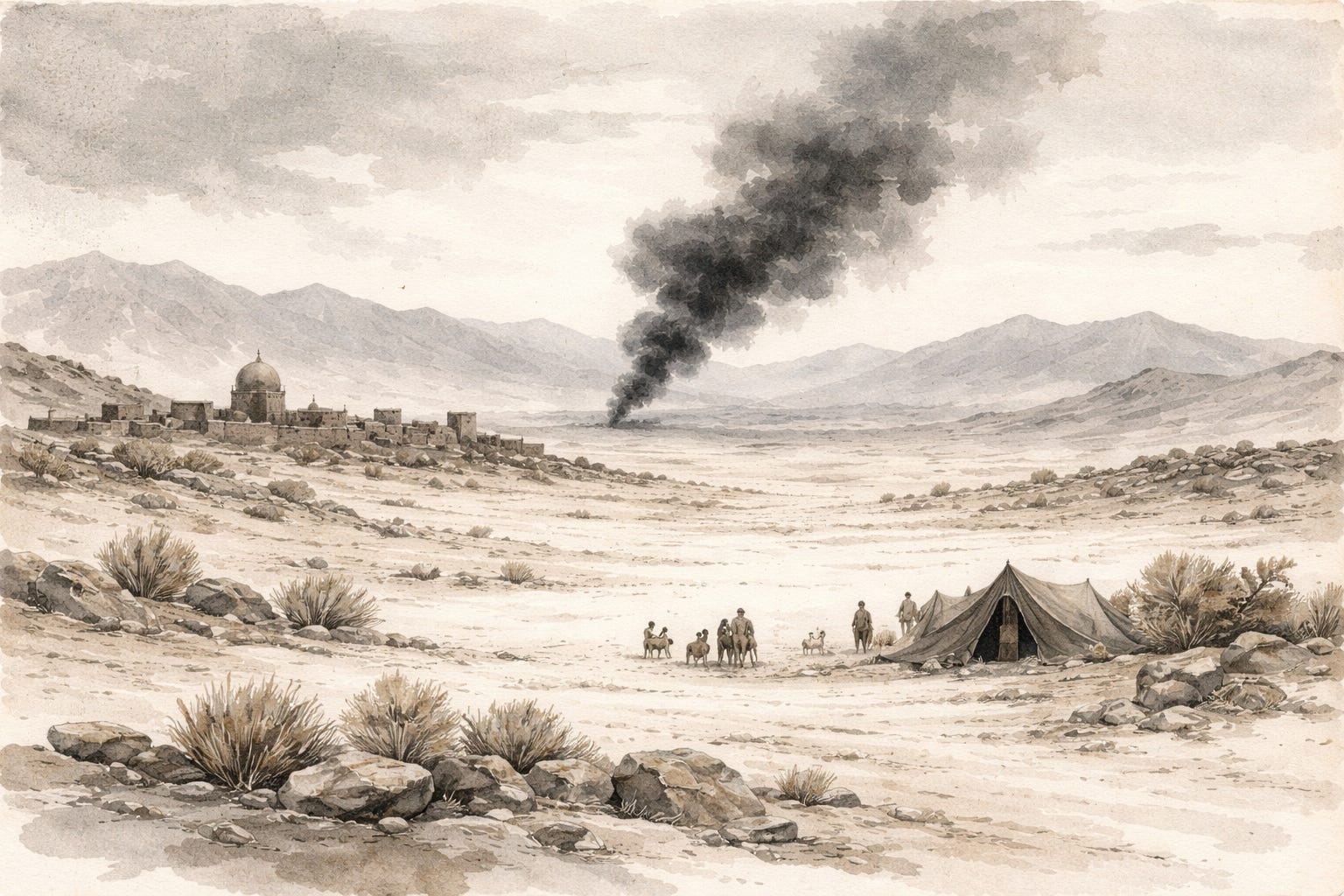
On the 20th of August my section was stationed at FOB Wilson. That day there were no missions for us, and we went about the small camp maintaining gear, watching movies cramped around laptops, or generally doing anything to avoid the screaming 40 degree heat. I don’t remember the time but it seems to be around late afternoon or early evening in my memory. Someone pointed out a large black smoke plume streaming up towards the sky, maybe a few kilometres down the road from our FOB. Something was on fire, and not the benevolent type of fire. Thick black smoke usually meant something was on fire that wasn’t supposed to be. Some comments were made about what it could be. No one from our camp was out that day. We weren’t aware that one of our sections from another camp was out with a Troop of armoured soldiers from Val’Cartier, and driving down Highway 1 near our FOB.
This was Afghanistan during the height of the war— there’s always stuff on fire or exploding. At some point we all get desensitized. The small group commenting on the fire broke and everyone strolled across the thick crushed gravel back to their green tents and little worlds of refuge. An hour or two later we were summoned by our Troop Warrant. He delivered the news. We sat and stood amongst cots, dusty gear, cases of water, and the odd personal item in a soldiers bunk space. One of the sections from our Squadron, the one my friend Steve was the gunner for, was hit by a massive IED just down the road. The LAV3 they were driving had only four members (Thankfully). Two were killed instantly, one slowly, and one got ejected from the vehicle during the blast and broke both his legs but survived.
The news lands and the tent is silent… every soldier hearing the worst possible news, followed by the second worst: our friends are dead, and there’s nothing we can do about it.
Sapper. Stephen Stock, Corporal. Dustin Wasden, and Sergeant Shawn Eades. Their callsign was Echo Two One Bravo, E21B.
It’s hard to accept and there’s only so much you can do. We’re still stuck in a FOB in an extremely dangerous area of Afghanistan. I chat with a friend of mine, another close friend of Steve’s. We reminisce about a hiking trip in the Rockies the three of us and my brother took shortly before coming to Afghanistan. I have a vivid memory of Steve rolling a massive round boulder down a huge embankment and giggling like a small boy at the speed and destruction the rock had on the other stones and ledges as it careened down the mountain.
We were in month six of a seven month tour of duty. We had already lost two guys that month, and would loose three more in a quick afternoon in about two weeks. Suffice it to say, morale wasn’t at an all-time high. You can feel the mood change during these waning months. This is around when most soldiers start to fade from excited adventure to melancholic acceptance, or worse— fear. The fun is over, we just want to get home, alive.
Traditionally, when a soldier was killed in action there was a Ramp Ceremony held for him or her on the tarmac at the large airbase outside Kandahar City. And once again on the tarmac in Trenton when they landed back home. In Afghanistan this ceremony served as a ritual for saying goodbye to the ones we lost, to deliver them back home with heroic dignity, and for those still breathing to come together and support each other; ensuring the enemy doesn’t have a morale victory as well.
Teammates and friends carry the caskets of the fallen in military parade fashion onto a waiting transport plane while other soldiers from all participating NATO countries stand at attention; watching, and paying their respects to the fallen. Each fallen soldier has an escort, a partner or close friend, who stays with the fallen for literally every minute until they are brought home and laid to rest. My friend John went with Steve.
“We can’t go back to base. The operation is starting tomorrow”, was the word around our camp the day after Steve, Shawn, and Dustin were killed, “we’ve got shit to do.” A large and important company sized operation had been in the works for weeks. A large scale clearance operation in the Zhari district where many Taliban had been hiding out for years, and where around a dozen or more Canadians had been killed since ‘06. We were not going to go back to the airfield for the ramp ceremony, we were never going to see our friends again. The thick, dark, fast-rising plume of smouldering LAV3 smoke would be the last memory we would have of them.
No goodbyes, no parades. A mission into the dusty depths of some Taliban hideouts. Suck it up and move out. It’s time to go to work. And to work we went.
I’m retired now. I share more stories than I used to. People were always curious though. Many civilians like to comment on soldiering. Or ask questions. Must be hard, they say, all those pushups? How heavy are your ruck sacks? Did you ever jump out of an airplane? And, There’s no way I could handle all that discipline, I don’t know how you guys do it! The five am wake ups, not for me. What’s the hardest part they finally ask. What’s the toughest shit they made you do?
It’s hard to say, we say.
It’s hard to say.
Powerful piece about loss and the imposible clarity trauma demands. That moment witnessing the smoke plume without knowing captures something essential about how soldiers proces tragedy in layers, first as distant observers then as grieving friends. The absence of a ramp ceremony underscores the brutal pragmatism of wartime operaton.