
12th Arrow - Intro
This is the introductory chapter of a historical fiction novel: The 12th Arrow

This is the introductory chapter of a historical fiction novel that is currently half finished. The 12th Arrow is set in the Upper Canadian wilderness during the French and Indian War (1754-1759). This is the war that culminated in the Battle of the Plains of Abraham and the defeat of the French and ‘New France’ in Canada.
The story follows Elias, a young man caught up in the great conflict when he is captured and taken in by a native tribe, a common practice during the era. He is thrust into a world he doesn’t understand and is forced to deal with life, love, war, and destiny. And the things that lay dormant in our souls.
note: Substack does not allow for proper novel formatting. I apologize for the blog-like formatting. It is what it is.
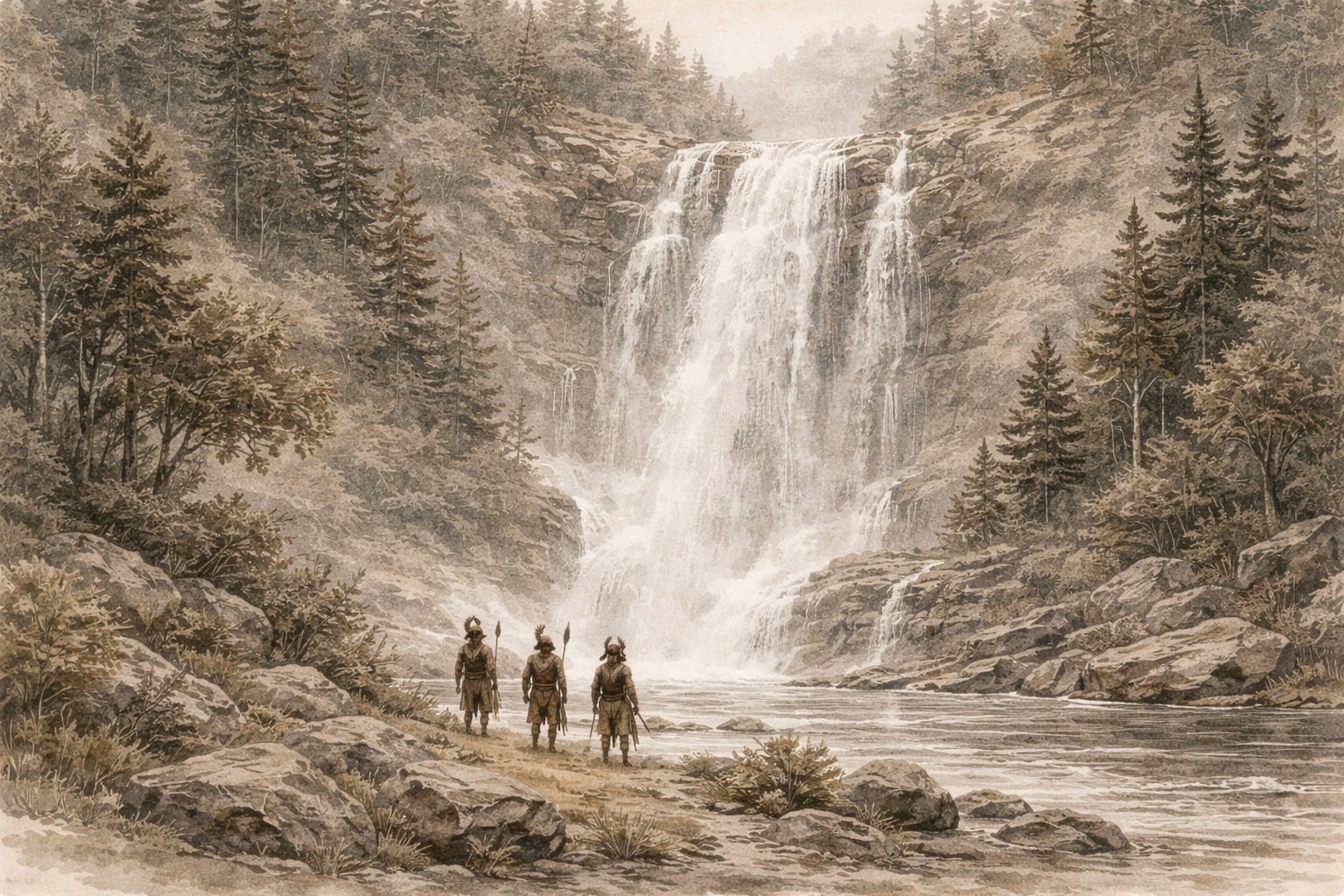
The French and Indian War
North America
1754—1759
A time not that long ago half the world met the other. And just as things have always been, man’s insatiable hunger for control led to death, injustice, and eventually— total war.
The North American continent— the New World— was carved up by the empires of France, England, Spain, and the Dutch. Contending with each other and an elusive and canny indigenous force, territorial boundaries and their owners changed hands often. The state of affairs in North America as it is today was by no means a certainty. And the outcome balanced precariously for many years; and especially during a tense few months in the summer of 1759.
Divinely, the fate of New France and the American colonies in British North America would not be decided by kings, infamous tyrants, wooden armadas, or armies with a hundred battalions. It would be decided by crafty guerrilla warriors, frontiersmen, colonial militia, second-rate generals, and, predictably, the unforgiving and wild Canadian terrain.
A plethora of sources exist to read about Virginian Major George Washington (yes the future first President of the United States) and how his defeat at Jumonville Glen started the giant conflict in May of 1754; or about British Major-General James Wolfe, and his months-long siege and eventual capture of the city of Quebec, the gates of Canada, against French general Montcalm, culminating in his death, both their deaths, and the British-American victory known as the Battle of the Plains of Abraham (1759).
Scholars and historians have captured it all in detail. There is no shortage of official records and personal accounts of the war ravaged periods during the 18th and 19th centuries in the New World. They account the names, places, dates, strategic concerns, supply routes and logistics, political ramifications and blunders. The weapons, the ships, the orders, the men and their possessions. The indigenous forces, who they were aligned with and when, how they fought, and how they lived. Exact in detail and taken mostly from firsthand sources one can read all about what happened. But— history isn’t only about what happened. Stories show us what it felt like for it to have happened, to live the history through the eyes of another.
These special and rare accounts do exist, like a shipmate’s diary or a general’s personal letters home. And, like the case of this story, a story that is hard to define, for when it was discovered and finally read; some said it was a story about connection and family; others said it was about God, or hidden powers; but mostly they said it was about love, and, they also said, it was about the possibility of what could have happened when the two worlds collided.
The story of Ashka Migizi was found in a molded trunk unearthed from stone ramparts from the forgotten remains of the French Fort of Frontenac, site of modern day Kingston, when excavators were stripping the earth for a new Sears in 1964. One hundred and fifty years after they were written and Two hundred and ten years after the events they described.
When the leather-bound trunk was finally cracked open it initially appeared to only contain one man’s 18th century war fighting equipment; a mix of well-crafted indigenous weapons and clothes, British-American firearms and shot, and French troupe de la Marine tools and uniforms. But upon further investigation by the Royal Ontario Museum, they discovered a false bottom in the rotting chest. And stuffed into the tiny sealed space was a stack of handwritten letters bound in leather. A large eagle’s feather and a small stone arrowhead were tucked into the thin leather ties and rested neatly on top. The leather cover had no markings and was deteriorating. Inside the leather flap and scrawled on a single sheet of now yellow-brown paper were the words “The Twelfth Arrow”.
The letters tell a story that takes us through what some today call the Seven Years war but was mostly referred to as the French and Indian War. A war that spanned not just the entire eastern North American continent but also ravaged all of Europe and the Atlantic seas. It was the first true world war— as Winston Churchill was quoted as saying many years later.
The story reveals some painful truths and also some timeless lessons. It appears to have been written during the War of 1812, but the scholars debate this. And the story appears to have been written with a specific recipient in mind. Some say the clues to who it was for are in the story. And a few say that they weren’t meant for anyone in particular. But maybe the mystery is part of the story. Maybe there’s a hidden historian in all of us. And maybe, it was written for you.